






How to remove lime from the floor
How do you remove lime from floors ? After renovation work, you often find yourself having to deal with stubborn, difficult-to-remove stains. Cement and lime tend to settle on surfaces and penetrate deep into the floor.
Removing lime from the floor: a common problem
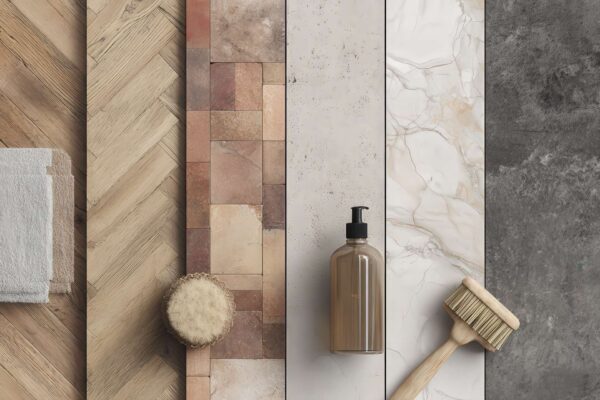
Precisely for this reason, using standard cleaning products is often not only unnecessary but also harmful to the materials. Consider terracotta , for example , which, in addition to being a material that adds warmth and prestige to both indoor and outdoor spaces, is particularly porous. Limescale in this case is very difficult to remove, as it tends to "reappear" despite efforts. What to do? The solution is an acid descaler (preferably also a rust remover) to perform a treatment that completely and permanently removes the dirt. After carefully dusting the floor, the product should be applied, making sure to choose a solution that respects the surface, is 100% effective , and above all, respects the environment and people.
Products to remove lime from floors
P-300/AD from New Chemical Prevention is an acid descaler and rust remover . It can be used on a wide variety of materials and is a specific cleaner for removing limescale deposits. It also eliminates whitish efflorescence, cement, plaster, and rust stains. It can also be used to remove whitewash and grout residue. However, it cannot be used on marble and polished natural stone.
The advantages are numerous. First of all, it doesn't give off any annoying odors or fumes, despite being super effective. It also has the advantage of not being particularly aggressive, since it is the result of green chemistry. It does not pollute, respecting the material, the environment and people. Its descaling action is proportional to the contact time, it releases a pleasant scent and can be diluted in various proportions.
Then we find P-300/C , a concentrated phosphoric acid descaler capable of providing a thorough clean on a wide range of surfaces. It also dissolves heavy cement residue, grout, efflorescence, and wall paint stains. It acts quickly on all siliceous materials, such as terracotta, earthenware, clinker , porcelain stoneware, and red stoneware. It cannot be used on polished limestone such as marble and natural stone, tuff, or slate, or any other materials that are not resistant to acid solutions. The benefits? It produces minimal fumes, allowing for a calmer work environment, and provides a quick and thorough clean, in addition to excellent descaling action.
Finally, P-500 is an acid descaler. It is an effective cleaning solution based on hydrochloric acid that contains surfactants and corrosion inhibitors. It removes lime residue, grout, plaster, rust, and oxidation , demonstrating a pickling and descaling action on absorbent building surfaces such as terracotta, porcelain stoneware, clinker, terracotta, and red stoneware. However, it cannot be used on marble, travertine, slate, or tuff , or in general on all polished limestones that are not resistant to acid solutions.