








Types of marble: what they are and how to clean them
What are the types of marble and how do you clean them ? This material is ideal for both interior and exterior cladding and has been used and prized since ancient times, considered a precious material, perfect for embellishing public or private buildings.
The term marble derives from the Greek word "marmaros," meaning "shining stone ." This description captures the material's primary characteristic: its ability to reflect light in a variety of ways, appearing translucent.
Types of marble: discovering a unique material
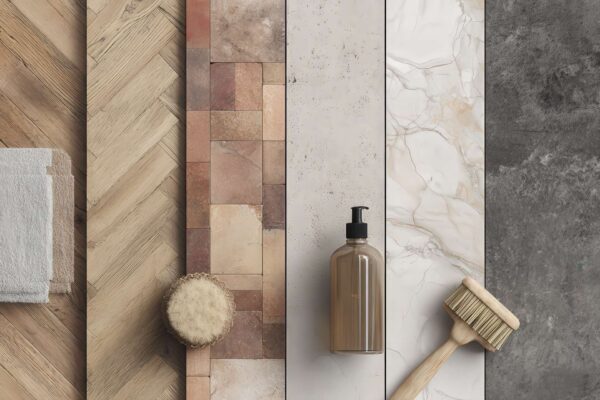
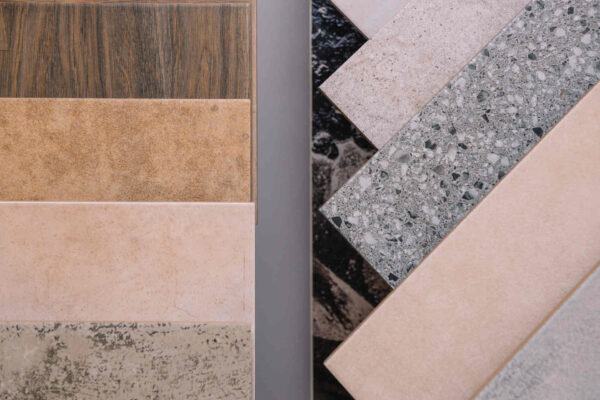
This metamorphic stone reacts to different light conditions based on its composition . Made of calcium carbonate (CaCO3), it is the result of a metamorphic process in sedimentary rocks (dolomite and limestone). Its colors are the result of the presence of particular mineral impurities in the rock, such as sand, silt, clay, or iron oxide. These impurities create veining in shades of green, red, gray, yellow, and purple. Admired since ancient times, marble is ideal for embellishing both interior and exterior spaces, from floors to cladding.
What are the types of marble
There are different types of marble that can be distinguished based on their composition. We therefore find marble:
- Crystalline limestone: with an appearance that is very reminiscent of sugar and is characterized by large crystals and without impurities.
- Cryptocrystalline limestone: the crystalline structure in this case is less defined and presents colorful fossils in many colours.
- Clastic marble: have small accumulations in siliceous materials or rocks.
- Serpentine: known as "Verdi Prato marble", it can have not only green, but also blue and yellow shades.
Marble can also be classified according to its origin:
- Asia Minor (Türkiye)
- America (United States, Mexico, Argentina, Chile, Brazil)
- Europe (Italy, Belgium, France, Spain, Greece, Ireland and Czech Republic)
- Africa (Algeria, Ethiopia, Tunisia and Egypt)
- Carrara marble.
How to clean the various types of marble
How do you clean the different types of marble? This material is as beautiful as it is delicate, so it must be cleaned and cared for properly. Mistrall by New Chemical Prevention, for example, is a neutral sanitizing detergent and brightener suitable for all washable surfaces.
Perfect for cleaning and maintaining a variety of surfaces, it is formulated with plant-based raw materials. It removes dirt, sanitizes, and degreases without leaving streaks, while also preventing the formation of mold, pathogenic germs, and bacteria. The highly concentrated formula contains plant-based raw materials and RSPO and ECOCERT certified surfactants . It is the perfect product for cleaning and maintaining surfaces. Its formula provides a brightening and sanitizing effect, prevents dirt, and leaves a pleasant scent (Mint-Pine or Lemon).
This low-foaming detergent requires no rinsing and leaves an extremely fresh and clean feeling in the air. It can be used in different concentrations depending on your needs and is the result of extensive research following green chemistry, respecting human health and the environment as well as surfaces. It is also suitable for washer-dryers and can be used in low doses (making it particularly economical in the long run). Finally, it respects the shine of waxy components and leaves no residue on cleaned surfaces.
Then we find Sintesi 3/P , a special interior finishing wax that provides a satin finish with stain-resistant properties and high resistance to foot traffic. It can be used not only on marble, but also on terracotta, terracotta, concrete, and unpolished natural stone. Stone K-600 is a water- and oil-repellent protector for interior and exterior stone. It is a highly water-repellent impregnator that provides effective, long-lasting stain protection. It does not alter the original color or cause surface film formation.